
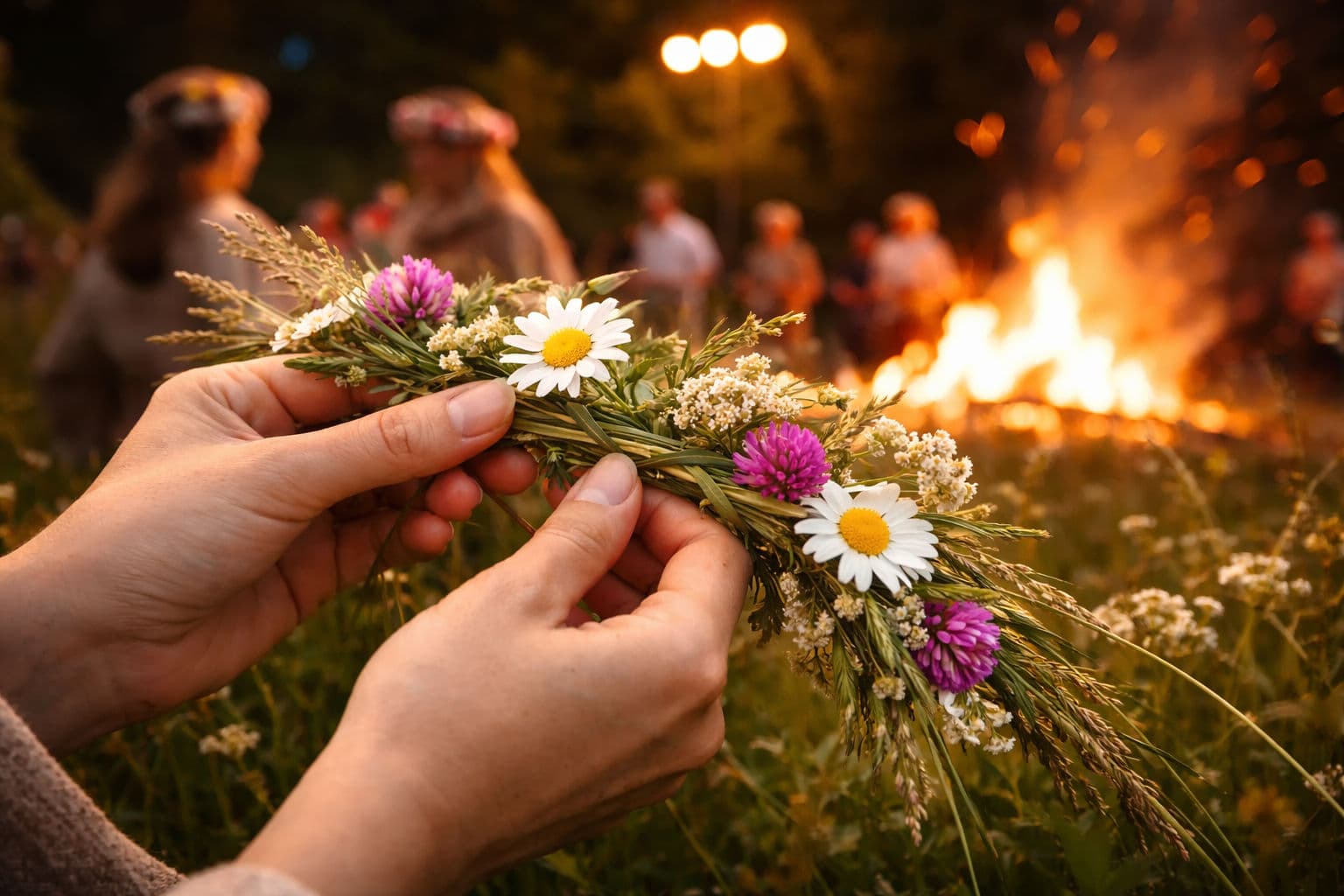
Fire, flowers, and folklore—Līgo is Latvia’s timeless celebration of the summer solstice and the magic of the shortest night.
🌿 Līgo — Midsummer’s Night Celebration
Līgo, also known as Jāņi, is one of the richest and most beloved traditions in Latvia. Celebrated every year on June 23–24, it marks the summer solstice—the turning point when days begin to shorten and nights slowly grow longer. Rooted in ancient pagan customs, Līgo originally took place between sowing and harvesting, a crucial period for agricultural societies.
🌾 A Celebration of Nature and Bloom
Today, the celebration remains deeply connected to nature and seasonal rhythms. Meadows burst into bloom, and people gather herbs and flowers believed to hold symbolic and medicinal power. This is why Midsummer’s Eve is often called “Herb Evening.”
Each plant carries meaning—used in healing, decoration, fortune-telling, or woven into wreaths worn throughout the festivities.
🌼 Wreaths, Fire, and Rituals
One of the most recognizable traditions is wreath-making. Women craft crowns from wildflowers, while men wear oak leaf wreaths, symbolizing strength and endurance.
As evening falls, large bonfires are lit—central to the celebration. These fires represent purification, protection, and the life-giving force of the sun. Brave participants often jump over the flames, a ritual believed to bring luck and ward off misfortune.
🔥 The Magic of the Shortest Night
The night itself holds special significance. As the shortest night of the year, it is meant to be spent awake. According to folklore, those who sleep through Līgo night will remain sluggish all summer.
Instead, people gather to sing traditional folk songs known as dainas, many ending with the refrain “Līgo.” These songs pass down generations of wisdom, reflecting themes of nature, fertility, and harmony.
🌿 The Legend of the Fern Flower
Another enduring legend is the search for the mythical fern flower. Said to bloom only on this magical night, it symbolizes hidden knowledge, love, and good fortune.
Though no one expects to truly find it, the search itself adds a sense of mystery and romance to the celebration.
🍞 Traditional Food and Festivity
Food plays a central role in the celebration. No Jāņi table is complete without:
- Jāņu siers (caraway cheese)
- Fresh bread
- Savory pastries
- Beer
These simple but symbolic foods reflect abundance and community, reinforcing the importance of sharing during this seasonal turning point.
🌅 Morning Rituals and Beliefs
By morning, traditions continue. Women wash their faces in morning dew for beauty, while men walk through dew-covered grass to attract prosperity.
These rituals reflect a deep belief in nature’s power during this transitional moment.
🌙 Ancient Roots and Lasting Meaning
Historically, Līgo is tied to symbolic figures representing change and cycles, echoing ideas found in figures like Janus—a guardian of thresholds and beginnings.
For ancient Latvians, Midsummer marked not just a seasonal shift, but a moment that could influence the success of future harvests and survival through winter.
✨ A Living Tradition
Despite centuries of cultural change, Līgo has endured. Preserved through oral traditions like dainas, it remains a vivid expression of Latvian identity.
To truly understand Līgo is not just to observe it, but to experience it—through fire, song, nature, and community—just as it has been for generations.